What the evidence covers, in plain terms
The evidence on hair supplements is mostly about deficiency, not about boosting healthy hair. NIH fact sheets describe what happens when a nutrient is missing, and they are cautious about claims for people who eat normally. That distinction matters because a bottle that says "hair loss support" is a marketing phrase, not a diagnosis, and not proof that a supplement suits your situation.
This page summarizes what a handful of public health sources actually say, nutrient by nutrient. It is general information from an independent site and not medical advice.
Why hair thins in the first place
Hair thinning has many ordinary causes, and a supplement addresses only some of them. MedlinePlus lists aging, genetics and family history, illness such as thyroid problems, diabetes and lupus, certain medicines and chemotherapy, stress, and a low-protein or otherwise poor diet [1]. It also names an autoimmune condition that affects hair follicles [1].
The same page says that what helps depends on the cause, and that in some cases dealing with the underlying cause corrects the problem [1]. Notice what that implies: if the cause is a medicine, a thyroid problem or stress, the nutrient aisle may not be the right place to start. A clinician can sort that out, and a blood test can sometimes show whether a deficiency exists at all.
Biotin: deficiency is rare, evidence is limited
Biotin is the nutrient most often attached to hair products. The NIH Office of Dietary Supplements says biotin deficiency is rare, and that severe deficiency in healthy people eating a normal mixed diet has never been reported [2]. It also says that claims about biotin supplements for hair, skin and nails are supported, at best, by only a few case reports and small studies, and it calls for further studies, especially in healthy people [2].
There is a practical catch. Supplementing with biotin beyond recommended intakes can cause clinically significant falsely high or falsely low lab results, and the fact sheet advises clinicians to ask patients about biotin-containing supplements when results do not match the clinical picture [2]. Tell your lab and clinician if you take any.
Zinc and vitamin C: hair signs only in deficiency
Zinc. The zinc fact sheet mentions hair in a narrow context. It says that in older children with zinc deficiency, hair loss, delayed growth and frequent infections become more common [3]. That is a statement about deficiency in children, not about adults who eat a normal diet or about supplements in general.
The fact sheet also sets a Tolerable Upper Intake Level of 40 mg for adults [3]. More is not better, and high intakes of one mineral are a reason to review your whole supplement list with a pharmacist.
Vitamin C. The vitamin C fact sheet describes scurvy as the deficiency condition, rare in developed countries, with "corkscrew hairs" among its signs alongside bleeding spots under the skin, joint pain and slow recovery of wounds [4]. For adults 19 and older, the upper level is 2,000 mg a day from food and supplements combined [4].
Again, this is about a deficiency that most people with a varied diet do not have. It does not show that extra vitamin C changes hair in anyone who is already getting enough.
How a label fits into this
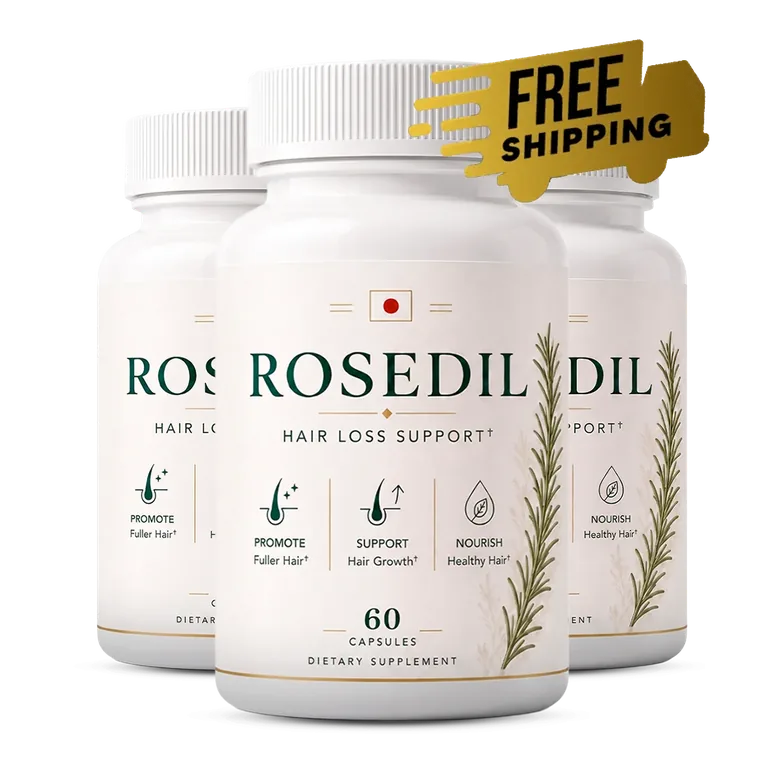
A product such as Rosedil is one example of a label that lists several of these nutrients: vitamin C, vitamin B3, vitamin B6, biotin, vitamin B5, calcium, zinc and a horsetail extract. Its label carries the standard statement that the claims have not been evaluated by the FDA. You can read our label summary or the side-by-side price guide if you want details, but the principle applies to any bottle: the front panel states a hope, and the Supplement Facts panel states the contents.
NCCIH advises telling all your providers about every supplement you take, reading and following the label, and not assuming that "natural" means safe [5]. It also warns that what is on the label may not be what is in the product, and that a word like "standardized" does not necessarily guarantee quality [5].
A checklist to bring to your appointment
- A photo of the full Supplement Facts panel, with the serving size.
- Every supplement, medicine and multivitamin you take, with doses.
- When you first noticed thinning, and whether it is patchy or all over.
- Family history of hair loss, thyroid problems or autoimmune conditions.
- Recent changes: illness, stress, a new medicine, a change in diet.
- Whether you have blood tests coming, since biotin can distort some results.
Bottom line: read the Supplement Facts panel on the bottle, ask a doctor or pharmacist about the cause of your hair changes before spending on supplements, and mention every product you take.
FAQ
Do hair vitamins work for everyone?
The sources we opened do not say so. They describe deficiencies as uncommon and describe the evidence for supplements in healthy people as limited, at best a few case reports and small studies for biotin. What helps depends on the cause, which a clinician can look for.
Can too many vitamins affect blood tests?
Biotin can. The NIH fact sheet says amounts beyond recommended intakes can cause falsely high or falsely low results in some lab tests. Tell the lab and your clinician about any biotin-containing product before you have blood drawn, and ask whether you should change anything beforehand.
What does a label phrase like "hair loss support" mean?
It is wording chosen by the seller, marked on this kind of label with a symbol pointing to the FDA disclaimer. It is not a diagnosis and not a finding. Use the ingredient panel and your clinician's advice to judge whether a product is relevant to you.
Is zinc linked to hair changes?
In the fact sheet we opened, hair loss is named as a sign of zinc deficiency in older children. It is not described as a general adult outcome. The adult upper level is 40 mg a day, so check totals across all supplements.
When should I see a clinician about thinning hair?
MedlinePlus gives no list of warning signs, only the advice to contact a provider with questions about your health. Sudden or patchy changes, or thinning alongside other symptoms, are sensible reasons to ask sooner rather than later.
Sources
- MedlinePlus — Hair Loss
- NIH Office of Dietary Supplements — Biotin, Health Professional Fact Sheet
- NIH Office of Dietary Supplements — Zinc, Health Professional Fact Sheet
- NIH Office of Dietary Supplements — Vitamin C, Health Professional Fact Sheet
- NCCIH (NIH) — Using Dietary Supplements Wisely
Safety: for adults; follow the label (2 capsules daily with an 8 oz glass of water). Ask your doctor or pharmacist first if you take medicines, are pregnant or nursing, or have a medical condition. Stop and call your doctor if you have a reaction.